
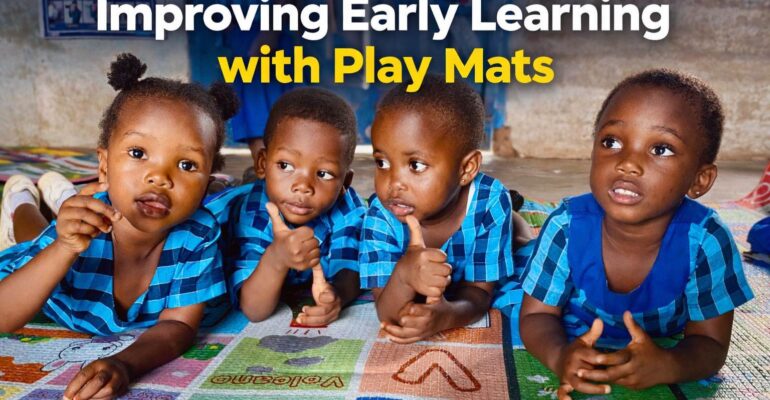
When the Michael Kunke Foundation team returned to Ruth Sunquist M/A Basic School in Amoanda, the scene that stayed with them was simple and urgent: nursery and kindergarten children resting on thin cloths laid directly on a cement floor during breaks and nap time. What may seem minor a cold, hard surface matters greatly at the earliest stages of learning. Comfortable, safe spaces support rest, play and the social-emotional development that underpins school readiness. With funding from Felicia Brown, the Foundation donated play mats to the school under its Education Empowerment for Sustainable Communities (EESC) programme. The mats were placed in nursery and kindergarten classrooms to provide soft, hygienic surfaces where children can rest, play and take part in guided early-learning activities.
Why this matters
Early childhood is a critical window for cognitive, motor and social development. Evidence from developmental practice shows that age-appropriate learning environments including safe places for rest and play improve attention, participation and overall learning outcomes. In resource constrained settings, small improvements to the physical classroom can remove daily barriers to learning and help teachers deliver play-based pedagogy more effectively.
A targeted response
The intervention followed a needs assessment by the Foundation team. Observations at the school showed that children were using cloths on cement during rest periods, a condition that increases discomfort and reduces opportunities for safe play. The Foundation’s targeted donation addressed that immediate need while supporting broader EESC goals of child-centred, inclusive education.
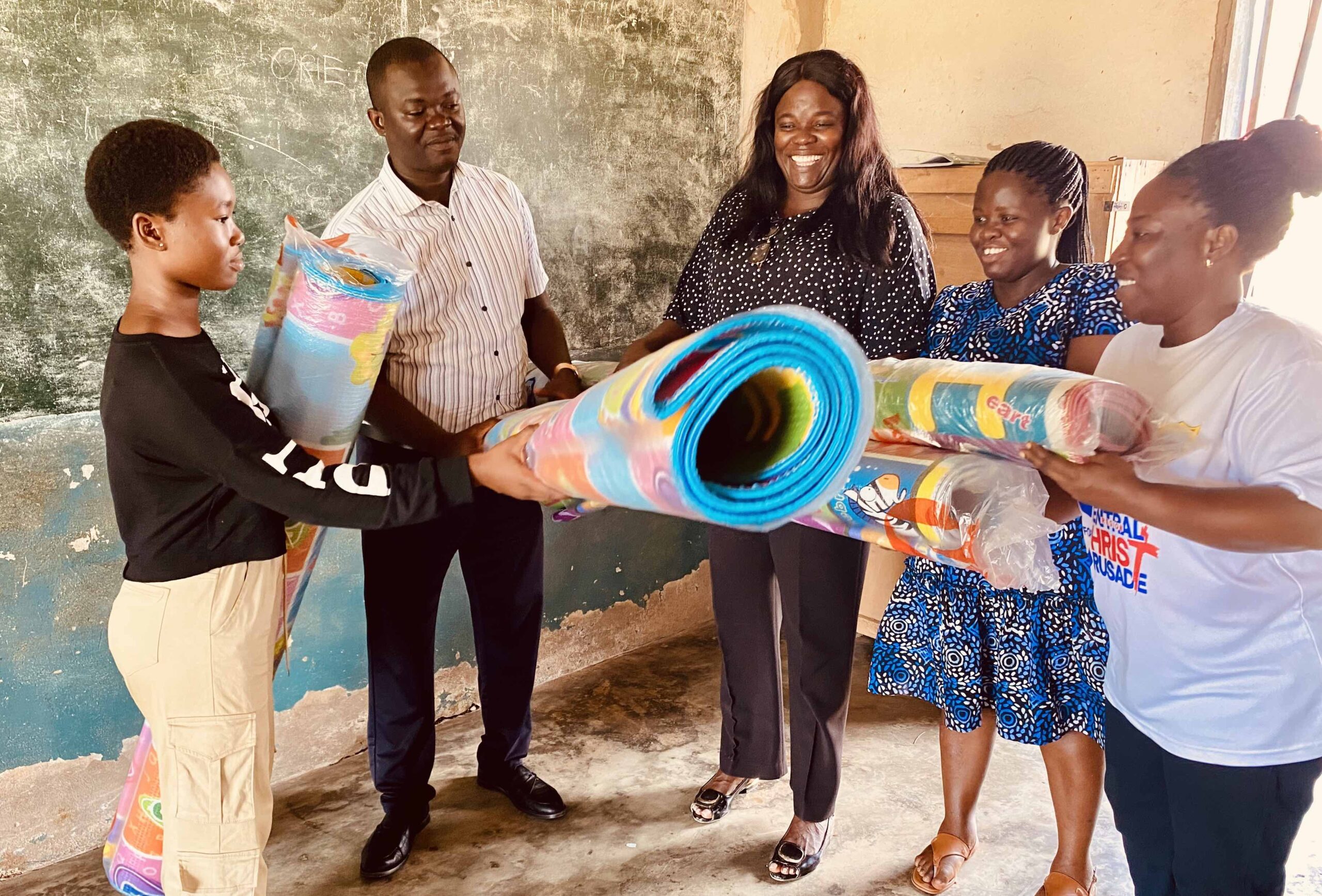
Volunteer of MKF, Maame Esinam Kunke handing over the mats to teachers of Ruth Sunquist M/A Basic School
Community and classroom impact
The play mats create a cleaner, warmer and more inviting learning space for the youngest pupils. For teachers, the mats make it easier to conduct group activities, story time and motor-skills exercises core elements of early childhood curricula that build the foundation for later literacy and numeracy.
By improving the day-to-day learning environment, the project contributes to:
- Enhanced child comfort and wellbeing
- Safer and more hygienic classroom conditions
- Better opportunities for play-based learning and social interaction
- Strengthened school readiness for entry into primary grades
Invitation to support
Small, well-targeted interventions can produce outsized benefits in early learning. The Michael Kunke Foundation welcomes partners, volunteers and donors who share a commitment to foundational education.
Give your skills. Share your heart. Volunteer with us.